
 David Mellor
Compression before the amp and compression after the amp provide distinctly different sound textures. So which should you choose and use?
Here is an excellent question sent in by an Audio Masterclass website visitor…
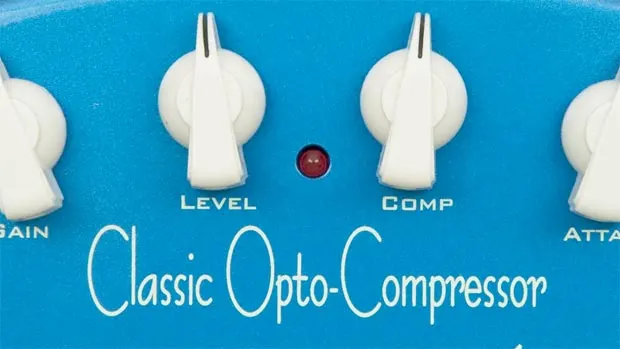
I like to use compression on my guitar tracks and achieve this through one of two methods. I either mic the guitar cab and have my guitar running into a Carl Martin compressor pedal and then into the amp so the guitar signal is compressed before it reaches the amp, or I just mic the cab without compressor, and then take the recorded guitar track and compress it afterwards. Is one method better than the other? What would most pros do in this situation? Compress in the signal path or compress the whole track after the recording?
The ‘most pros’ that you mention would either audition both methods in the context of the track they were working on, or use their prior experience to decide what to do. That’s that part of the question easily answered.
But why might you choose to compress the guitar before the amp? Conventional wisdom suggests that if you record a clean track, you can compress it later. If you compress first, you can never get back to that uncompressed sound, if you feel you need it.
But there is a HUGE difference here…
Without compression, the amp will impress its character mostly upon the peak levels of the signal. But with compression, the average level going into the amp will be higher, therefore the amp has more to chew on. This is very different to the sound of compressing after the amp.

Years (er, decades) ago I had a strange recording chain of my own…
I would connect my Fender Stratocaster to an Alesis Microverb digital reverb unit, set to zero reverb. I was in effect using the Microverb as a high-impedance preamp and nothing more.
I would connect the output of the Microverb to a Drawmer DL221 compressor, the standard workhorse compressor over many years of recording. The output of that in turn connected to a tiny Fender Champ amplifier, which I would mic up. I can’t remember which mic I used.
I used to love that sound, and the only reason I don’t do it now is because it’s easier to do it in the DAW. I’ll choose a compressor plug-in followed by an amp emulator.
But recording guitar the traditional and ‘purist’ way through a pedal, amp and speaker cabinet is undoubtedly a great way to work. So yes – compression pedal, a lovely warm tube amp, a speaker cabinet wth maybe a classic Celestion drive unit. It’s going to sound amazing!
Try it out and tell me what you think! P.S. Send examples.